
Maury Lavitt ’28
Contributor
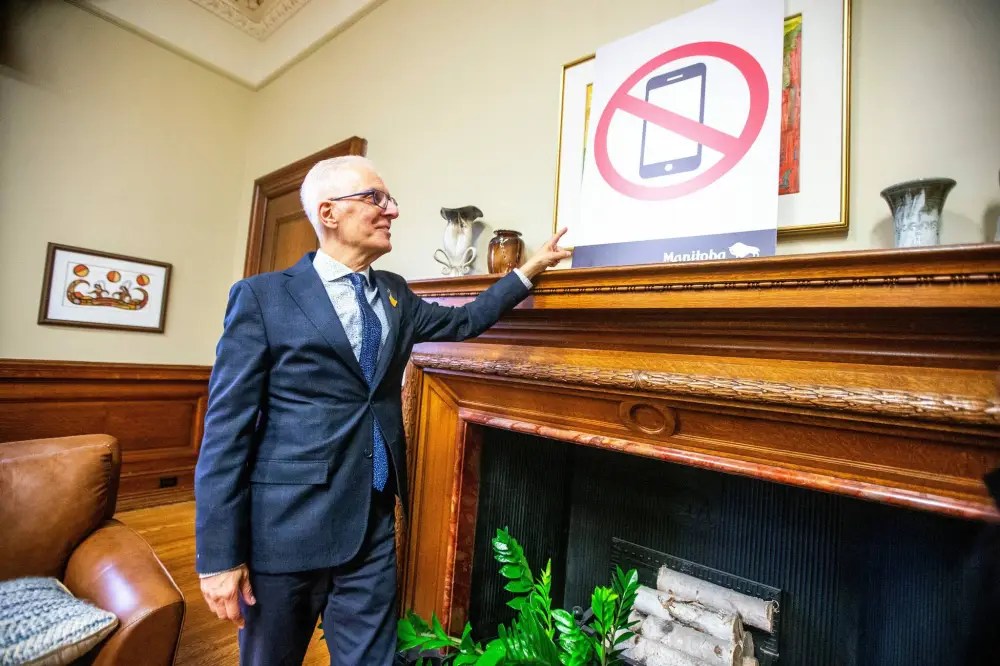
Photo Credit: Mikaela Mackenzie/Free Press
Let’s just admit it: we use our phones a lot. Most of the free time we have, we are mindlessly scrolling on social media or texting our friends. Any chance we get, we check our phones. In the hallway between classes, during the car ride, and at home, we don’t realize just how much time we spend on these devices. All that time, which will amount to about 14.5 years in your lifetime, could be much better spent on productive tasks. Your phone is a large distraction from getting work done, especially at school.
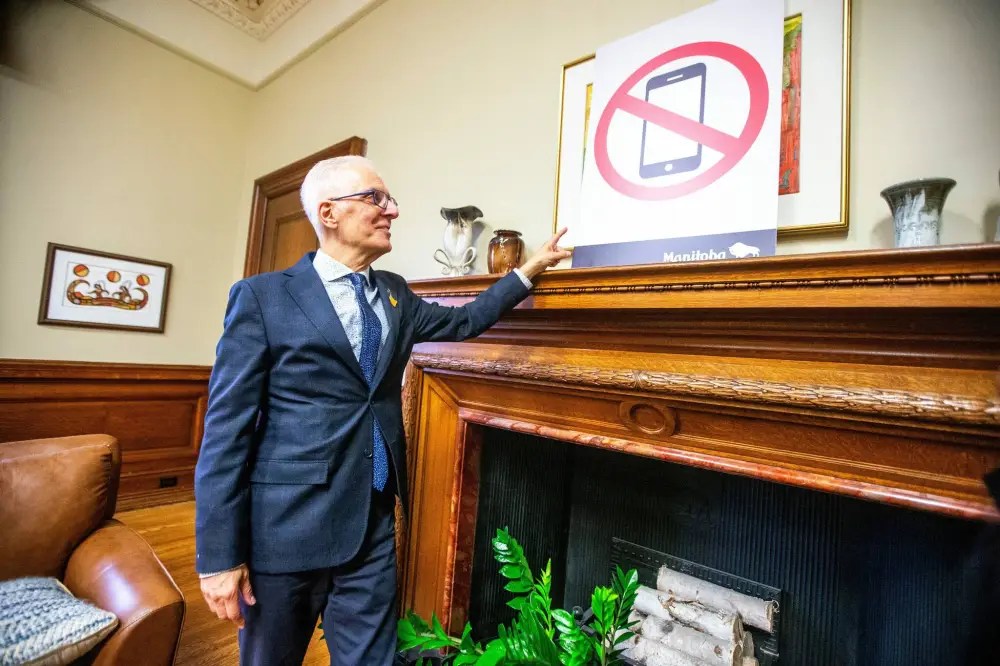
In August of this year, the Manitoba government recognized that fact and implemented a ban on cellphones inside classrooms. This ban’s purpose is to minimize classroom distractions. The ban completely prohibits cellphone use during school hours for students K-8. The Manitoba Minister of Education, Nello Altomare, explained, “We know cellphones can be a real distraction for students… [and] these provincial guidelines will give teachers the tools they need to keep students focused and class time is spent on learning”. He also went on to say that cell phones can also cause depression and anxiety in children and prohibiting them in schools will mitigate those effects. For high school students, cell phones will only be banned during class time, with breaks and lunchtimes being fair game for cell phone use. Teachers for grades 9-12 will be allowed to instruct students to use their cell phones in class for educational purposes. “We also believe that schools are places to learn about responsible digital citizenship… and schools can play an integral role in helping students become citizens that won’t be easily distracted… and know when they’re becoming less efficient,” Altomare stated in a CBC radio interview.
Altomare also believes that teachers will play an important role in the execution of this ban. He says that they must be exhibiting “proper digital citizenship” in the classroom to be good role models for students. Altomare believes that students will reflect this positive behaviour, making the transition much easier for schools. Most teachers agree with the ban, with St. Paul’s Mr. Ridley saying, “When you want to take someone’s childhood away, give them a phone. It’s a good thing that we’re limiting this in schools and protecting our young people”.
While many students are unsatisfied with the limitation on their personal freedoms, the Manitoba government and Nello Altomare both believe it is beneficial for all students. While it will be a hard transition, we will have to come to terms with the ban and embrace it as an opportunity to improve ourselves and become better, and less distracted, people.
 The Crusader News