
Alden Minuk ’26
Copy Editor
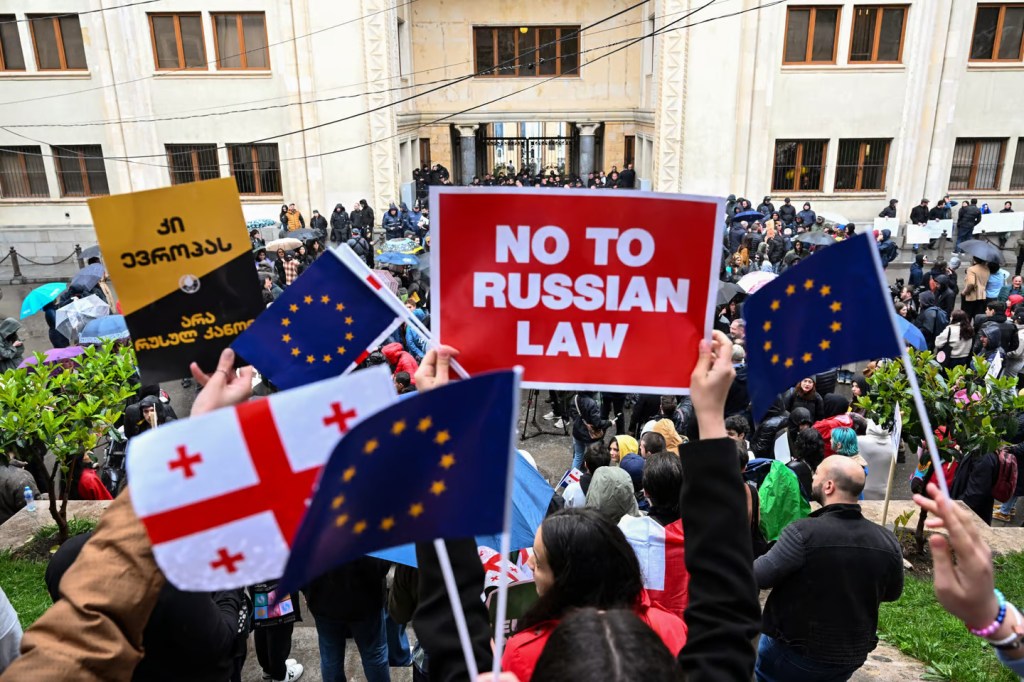
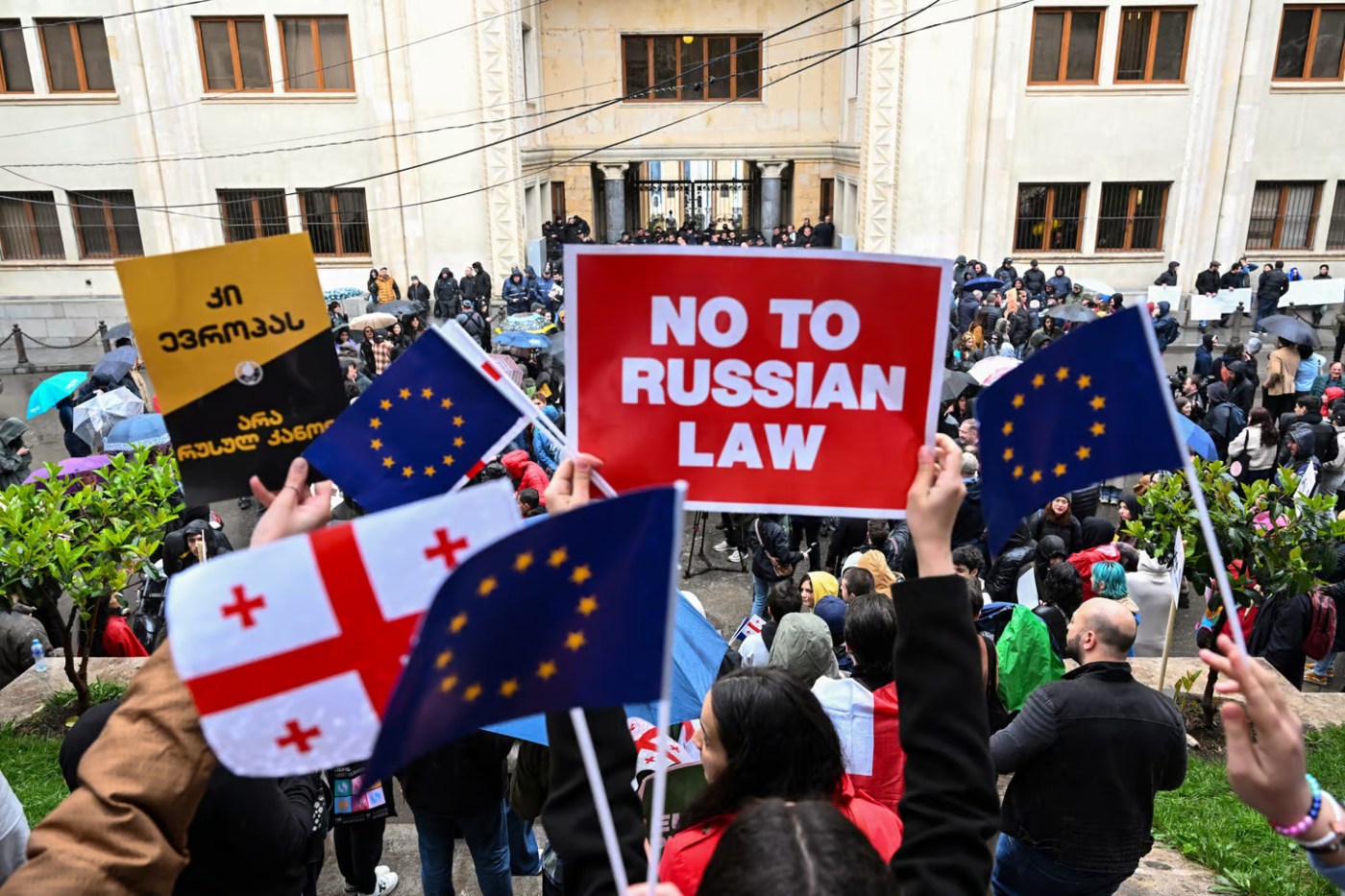
A recent controversial Georgian law has caused numerous protesters to take to the street, attracting the attention of the USA and EU. The bill states that any media or non-government organization that receives more than 20% of its funding from abroad must register as “pursuing the interests of a foreign power,” and it resembles other bills that have been used in Russia to clamp down on political enemies of the Kremlin. The proposal was met with outrage in Georgia, with thousands protesting and skirmishing with riot police in the streets while chanting, “No to Russian law!” Even the members of parliament who opposed the bill began fighting within the chamber, many of whom were locked out during the initial vote.
The next step for the bill is to be sent to the president, who has said she will veto it. However, this veto can and probably will be overruled with another vote. Even outside of Georgia, the bill has caused outrage being deemed incompatible with the EU’s guidelines for joining—a goal that Georgia has long strived for. Last year, the country was accepted as a candidate but, if the bill passes, it is unlikely they will be allowed to join. The US has also warned that over $390 million allocated to Georgia would be put under review if the US and its investments are affected.
Georgia finds itself in a very similar spot to Ukraine, where it is sandwiched between the West and Russia. 80% of Georgians want to join the EU but are having difficulties escaping Russia’s strong pull. The party who drafted the bill—Georgian Dream—has tried to justify it by arguing that it is in the interest of transparency and national sovereignty. However, with backlash from both protesters and other countries and the fact that foreign media influence is a none-issue in Georgia, it seems pointless to continue pushing the bill. If the bill was in everyone’s interests, they likely would have scrapped it at the first sign of widespread disapproval. The fact that they continue to push the bill suggests that there is an ulterior motive, like attempting to subvert the upcoming election and cement Georgia’s leadership as the country’s ruling power, which weakens Georgia’s already fragile status as a democracy. Many Georgians still remember the 2008 Russian invasion, where Russia annexed about 20% of their internationally recognized territory. This new law reinforces the fear that the new bill would be the start of the beginning of the end of civil society in the country. Regardless of whether the bill is supposed to be in the interest of transparency or something more sinister, if it passes it could mark the start a dark age for the Georgian people.
 The Crusader News