


William Hudson ’24 & Alessandro de Groot ’24
Science & Technology Editor & Contributor

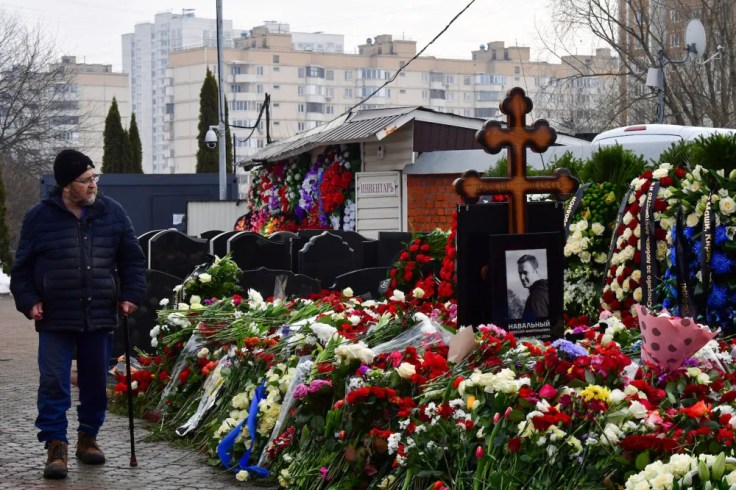
The man Vladimir Putin feared most is dead. On February 16, Russian authorities reported 47-year-old Alexi Navalny, Russian opposition leader and anti-corruption activist, had died in a Siberian prison. According to the prison service of the Yamalo-Nenets Autonomous District, Navalny died suddenly, falling ill after a walk. They hypothesize that a blood clot may have been the cause.
Navalny spent three years in prison, and approximately three hundred days in solitary confinement. Throughout his sentence, he claimed that he was denied medical care and was awoken by officers at night. Navalny’s health deteriorated during his sentence, as he suffered extreme back pain, fevers, and continuing nerve issues.
His mother noted that he was happy and seemed healthy during her final visit on February 12. These details sound suspicious, especially in the context of the series of other Russian opposition politicians, uncooperative oligarchs, and critical journalists killed under mysterious circumstances, a phenomenon known as “Russian Sudden Death Syndrome”. They have led, among other heads of state or international organizations, American President Joe Biden to say, “Make no mistake, Putin is responsible for Navalny’s death.”
Russia had already tried to neutralize Navalny at least once before, in December of 2020. While flying over Siberia, Navalny fell ill, forcing the plane he was flying in to make an emergency landing. Navalny accused Russia’s Federal Security Service (FSB) of poisoning him. Traces of the Russian-made nerve-agent Novichok were found on his body, and Navalny later recorded a phone call with an FSB agent where it was admitted that the nerve-agent was applied to Navalny’s underwear. When Navalny returned to Russia in 2021, he was instantly arrested on charges of “extremism” and “corruption”.
Navalny was labelled Putin’s greatest critic by media sources, having spread information to expose the Russian government’s corruption. One of Navalny’s most notable exposés is of the bribe that led to the construction of “Putin’s Palace”, funded by oligarchs and the money of the Russian people. The palace, built on the Black Sea coast as a residence and potential bunker for Putin, allegedly cost 1.86 billion CAD, with construction running from 2005 until 2020. The video released by Navalny including his claims was released after his final arrest.
His death comes a month before the Russian election, where Putin is practically running uncontested to stay in power for another six years; this would be his fifth term. The question is: following the death of the most successful critic of Vladimir Putin, do hopes for a Russia governed by law instead of Putin also die?
Analysts disagree on a motive, if any, for a possible murder of Navalny. They all, however, agree on one point: Putin has an iron grip on power in the Russian Federation. According to Andrei Soldatov and Irina Borogan in Foreign Affairs, “Navalny’s death marks the culmination of years of efforts by the Russian state to eliminate all sources of opposition.” Without the force of Navalny, there is no figure for Russians to rally behind against Putin.
However, the same analysis found that those willing to oppose Putin will not disappear, and that Navalny created real change in terms of revealing Russian corruption and encouraging people to fight for change. Navalny’s wife has promised to continue her late husband’s work, but it will take time for another figure as prominent as Navalny to establish themselves as a leader for a Russia without Putin.
Clearly, the Russian government, or, more accurately, Putin, has no issue partaking in tyranny and corruption. Alexei Navalny’s passing is no exception to this rule in Russian society. One must hope for an end to the corrupt rule of Putin and his kleptocracy, especially as the war in Ukraine has raged on for two years.
 The Crusader News