
Isaac Lavitt ‘25
Deputy Editor
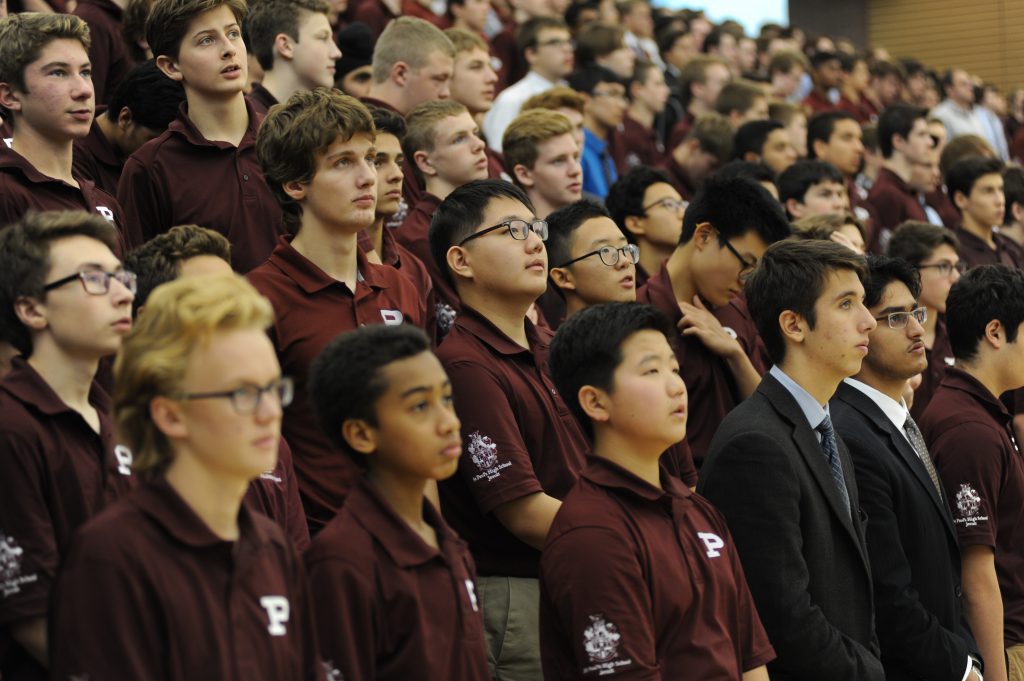
St. Paul’s High School has always been known for its strict discipline and commitment to quality education. Part of this learning atmosphere is the school’s dress code, one that is distinguished from all others in the city. Consisting of a sport coat, slacks, a belt, dress shoes, and a tie, this attire has been in place since the school’s founding. However, today, the history of dress code is in question. From the addition of the sweatshirt this September to the temporary removal of the tie in 2021, the school has been experimenting with relaxed standards to foster a more casual environment. Most important, however, is the query recently posed directly to parents: must the tie be permanently removed from dress code? Thus, it is crucial that we examine the necessity of dress code in our modern world, and then decide whether to carry it on for future generations or not.
For some, the dress code represents more than its practical purpose. Tradition is a strong resistance to change, and dress code currently champions this tradition. The suits and ties set our students apart from others in our city, creating an air of virtue. This molds behaviour in our students to be better people, to be men for others. It can be said that it is an honour to wear our dress code and to be a part of our community.
However, the school’s dress code has not been constant. Throughout the years, we have accepted different styles and items once denied by previous generations. One such change was the introduction of warm weather dress code. As many of our parents are so fond to remind us, they had to swelter through the barely air-conditioned classes throughout the early summer in suits. Furthermore, we have added khakis, shorts, and sweatshirts to our dress code in the past two decades.
Yet, the tie is different. In maintaining a business-like atmosphere, the tie mimics the offices and workplaces we will likely spend our working lives within. Yet, many argue that business casual is dead. With the advent of the pandemic, and shifts to online and remote work, the outfit of choice has transformed from suits and ties to t-shirts and sweatpants. Hence, is it worth our comfort and money to wear a uniform that we may never wear in the “real world”?
The evolution of our uniform, in essence, is a question of whether current attitudes warrant a change in our wardrobe. The value of dress code goes beneath mere pieces of fabric; for many, it represents our community. However, as our school evolves, so must our symbols. For these reasons, the school has asked for our community’s opinions. And the body has spoken. As the tie leaves the dress code this fall, it is imperative to remember where we have been, and more importantly, where we are headed.

 The Crusader News