
Alden Minuk ’26
Copy Editor
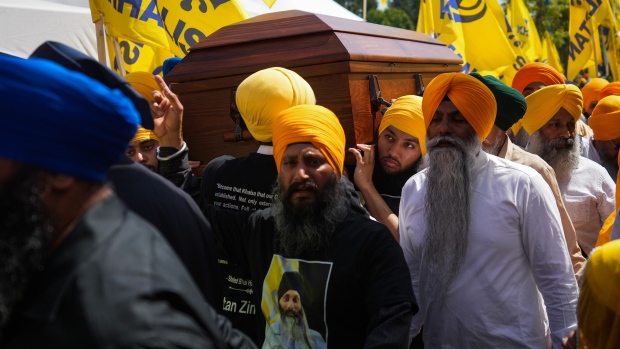
On June 18, Sikh community leader Hardeep Singh Nijjar was murdered outside of a Sikh place of worship in British Columbia. Canadian intelligence agencies have been looking into the murder and have found credible ties to Indian government agents. In September, Justin Trudeau publicly announced that the Indian government was believed to be involved with the murder, showing the high degree of confidence placed in this intel.
Killing a person in Canada, especially by a foreign government, is a very serious problem as it violates the guaranteed protection that is awarded by being in Canada. Canadian leaders have not, however, openly accused India of killing Nijjar; they are simply investigating a possibility and have encouraged the Indian government to cooperate in investigations. Relations with India have been tense, with India calling for Canada to remove about two-thirds of its diplomats in India. The Indian government has stated that if the diplomats have not been removed on short notice, they will face prosecution.
One of the reasons behind the Indian government’s murder of Nijjar is that he was an outspoken proponent of an independence movement to make the Sikh-majority Indian state of Punjab into an independent nation called Khalistan. Just before his assassination, Nijjar helped organize a symbolic referendum across the Sikh diaspora on creating an independent Sikh state. Nijjar was labelling himself as a target by vocally stating his affiliations and standing up for the Sikh people. The Indian government, however, attacks the movement for being a hotbed for terrorism, presenting examples including the bombing of Air India flight in 1985 (the worst terrorist attack in Canadian history) and assassinating former Indian Prime Minister Indira Ghandi.
However, in the modern world, everybody deserves a trial. Assassinations of dissidents or criminals—especially those carried out by foreign governments on Canadian soil—is inexcusable. In Canada, the right to free speech protects people from persecution for faith, beliefs, or traditions. However, with the murder of Nijjar, that safety may have been violated.
As the former president of the Guru Nanak Sikh Gurdwara, a prominent place of worship in Surrey’s large Sikh community, Nijjar was respected for his courage to speak out against what he felt was unjust. Nijjar’s murder left many, including his family and members of the congregation, shattered, but also empowered to take further action.
The murder of people in other countries, especially somewhere that heavily prides themselves for the guaranteed protection of its citizens, will not go unnoticed. Relations between Canada and the Indian government may be irreparably damaged by this dispute if it is determined that the Indian government did indeed kill Nijjar.
Sources
https://www.cbc.ca/news/politics/canada-diplomats-india-1.6992396
https://www.cnbc.com/2023/09/19/india-canada https://www.youtube.com/watch?v=ICFggjGgIdY-sikh-activist-killing.html
 The Crusader News